Blog

A Merchant Cash Advance can provide fast working capital when a business does not qualify for bank financing or needs funds quickly. But the legal terms matter as much as the funding amount. A contract described as a purchase of future receivables can still create serious payment, collection, and personal liability risks.
The key is to understand what the agreement requires, what happens if revenue falls, and which rights the funder may enforce. This guide provides general educational information for business owners. It is not legal advice for a specific agreement, dispute, or state.
Merchant Cash Advances are generally legal, but the legality of a specific transaction depends on its structure, contract terms, conduct, and applicable state law.
An MCA is usually presented as a purchase of a business’s future receivables. The funder pays the business a lump sum. In return, the business agrees to deliver a stated amount of future sales or revenue.
This differs from a traditional business loan, where the borrower repays principal and interest on a fixed schedule. However, calling a transaction an MCA does not automatically make it a true receivables purchase.

Courts and regulators may examine whether the deal actually shifts revenue risk to the funder. If the contract requires repayment regardless of the business’s revenue, blocks meaningful payment adjustments, or treats ordinary business failure as a default, it may raise questions about whether the transaction functions as a loan.
State laws also matter. Some states require disclosures for commercial financing offers, including merchant cash advances. Rules can vary based on the business location, funding amount, provider, broker, and type of transaction.
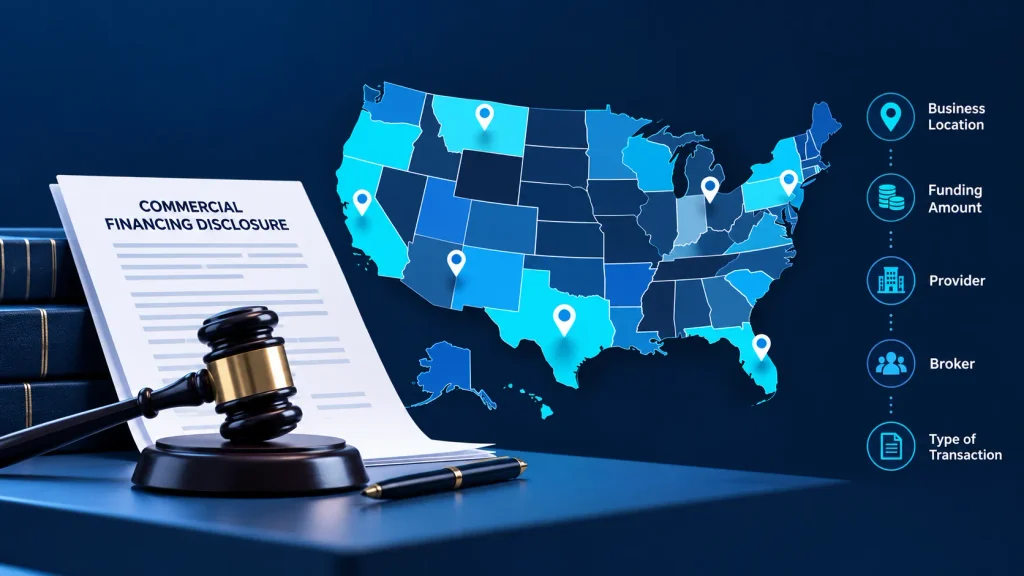
A true receivables purchase gives the funder a right to receive a share of future revenue. A loan creates a fixed obligation to repay money regardless of revenue.
The wording on the first page of an MCA agreement does not decide the issue by itself. Courts may look at how the contract operates in real life.
| Contract feature | Why it matters |
| Payment based on actual revenue | Supports the idea that the funder accepts revenue risk |
| Fixed daily ACH withdrawal | May create concern if it does not adjust when sales decline |
| Genuine reconciliation process | Allows payments to reflect actual receivables |
| No finite repayment term | Can support a receivables purchase structure |
| Risk of business failure placed on funder | Supports a true sale of future receivables |
| Mandatory full repayment despite revenue loss | May suggest a fixed debt obligation |
A fixed daily or weekly payment can create legal risk when it operates like a loan payment instead of a collection of a percentage of revenue.
Many MCA agreements use fixed ACH withdrawals for convenience. The amount may be based on estimated receivables at the time of funding. That structure is not automatically unlawful.
The issue is whether the payment can be adjusted when actual revenue falls. A business with lower sales should not be required to deliver the same amount of receivables as a business with steady or growing sales if the agreement truly purchases a percentage of future revenue.
Before signing, ask these questions:
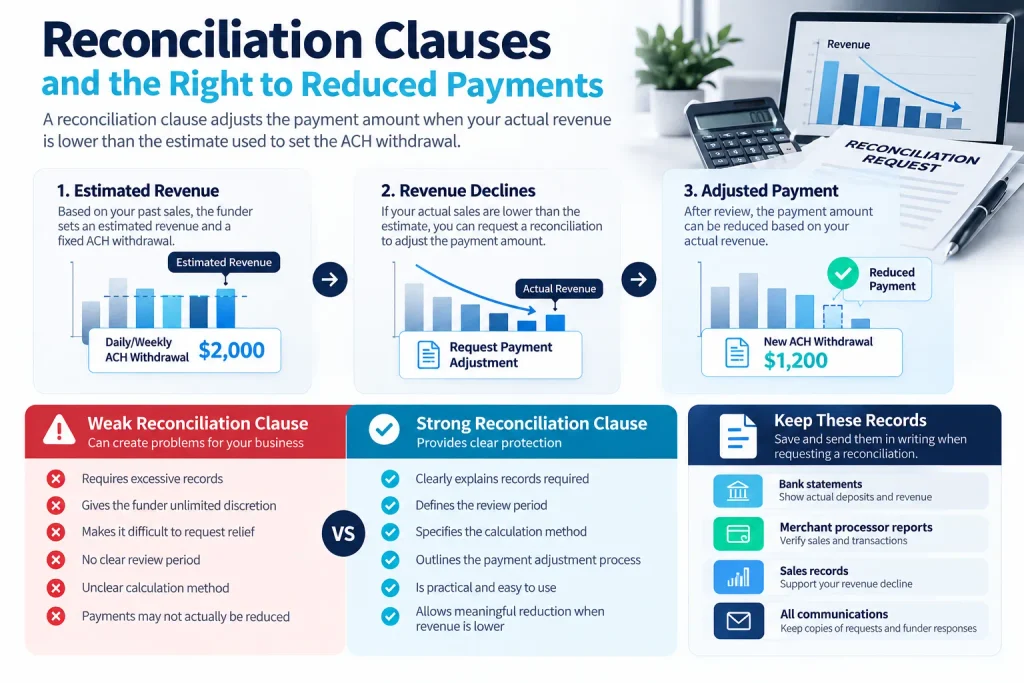
A reconciliation clause is intended to adjust the payment amount when the business’s actual revenue is lower than the estimate used to set the ACH withdrawal.
This clause can be one of the most important provisions in an MCA agreement. A useful reconciliation process should be clear, available, and practical to use.
A weak clause may require excessive records, give the funder unlimited discretion, or make it difficult for the business to request relief. A strong clause should explain the records required, the review period, the calculation method, and the payment adjustment process.
Keep copies of all reconciliation requests. Send them in writing. Save bank statements, merchant processor reports, sales records, and all responses from the funder.
Default provisions can create legal concerns when they make repayment absolute, even after a legitimate decline in revenue or business failure.
Some MCA agreements define default broadly. The business may be considered in default for missed withdrawals, changed bank accounts, reduced processing activity, alleged misrepresentations, additional financing, or a failure to provide requested records.
Not every default clause is invalid. But the terms should match the deal’s stated purpose. If a contract says the funder purchased future receivables, then the agreement should account for the possibility that receivables may decline.
A contract becomes more concerning when ordinary business conditions are treated as a breach and the funder can immediately demand the full remaining purchased amount.
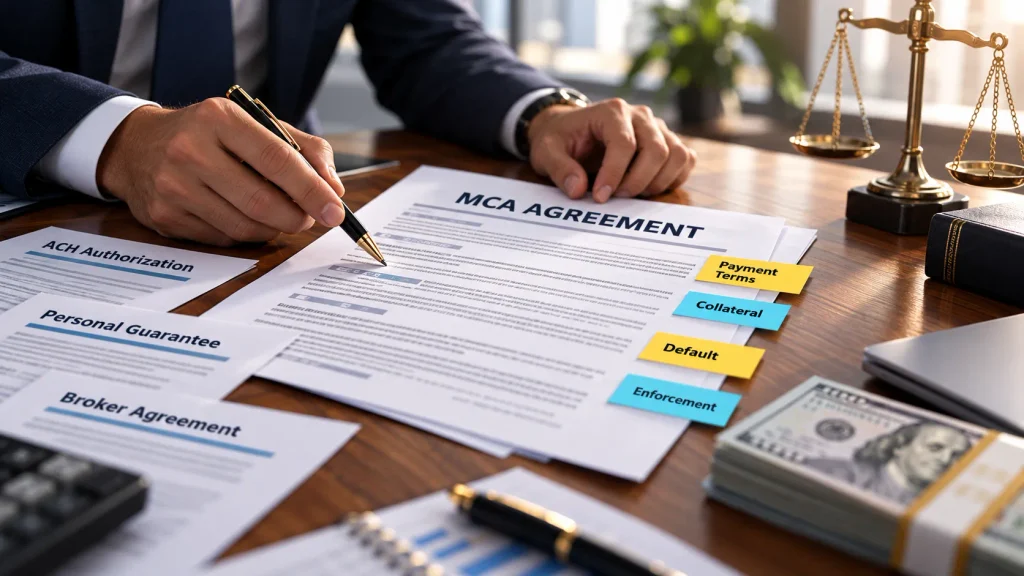
The most important MCA risks are often found in the contract’s payment, collateral, default, and enforcement clauses.
Read the entire agreement, including schedules, guaranties, ACH authorizations, broker agreements, and any document incorporated by reference. Do not rely only on the sales call or funding summary.
A factor rate shows how the purchased amount is calculated, but it does not show the full effect of the payment schedule on business cash flow.
For example, a business may receive $100,000 and agree to remit $140,000 in future receivables. The $40,000 difference is the cost built into the transaction.
The payment speed matters. A business that remits the full purchased amount in six months experiences a different cash flow burden than a business that remits it over eighteen months.
Before accepting the offer, identify:
Daily or weekly ACH withdrawals can strain operating cash flow because they continue even when sales slow.
A business may have enough annual revenue to support an MCA on paper while still struggling to meet frequent withdrawals. Rent, payroll, inventory, taxes, vendor payments, and existing financing obligations do not pause because revenue has a slow week.
Review cash flow by week, not only by month. Estimate what happens if sales fall for thirty, sixty, or ninety days.
Do not assume that changing bank accounts or blocking withdrawals solves the problem. Those actions may trigger a default allegation or other enforcement steps under the agreement. Get legal advice before taking action that could affect contractual rights.
A default clause explains the events that can allow a funder to demand payment, add fees, or begin enforcement efforts.
Look for default triggers that go beyond a missed payment. Examples can include:
An acceleration clause may allow the funder to claim that the entire remaining amount is immediately due after a default. Read this section carefully because it can change a cash flow problem into a larger legal dispute.
A personal guarantee can expose an owner’s personal assets if the guarantee is enforceable and the conditions for liability are met.
Business owners often focus on the company’s payment obligation and overlook the personal guaranty. A guaranty may make the owner responsible for certain losses, fraud allegations, contract breaches, or the unpaid balance.
Personal liability is not always automatic. It depends on the guarantee language, the facts, the governing law, and whether the funder follows the required enforcement process.
Review these points before signing:
A UCC filing gives public notice that a funder may claim a security interest in specified business assets.
A UCC filing is common in commercial financing. It does not automatically mean the funder owns every business asset or can take money from a bank account without following legal procedures.
The agreement should identify the collateral. It may include receivables, deposit accounts, equipment, inventory, or other business assets. The scope of the lien matters because it can affect future financing, asset sales, and business operations.
Search for existing UCC filings before taking additional funding. Multiple liens can make refinancing, selling assets, or obtaining bank financing more difficult.
A confession of judgment can give a funder a faster route to obtain a judgment, but its availability and enforceability depend on the jurisdiction and the specific agreement.
A confession of judgment is a document in which a business or owner may agree in advance to the entry of a judgment if certain conditions occur. These provisions have received significant legal scrutiny because they can limit the opportunity to dispute the claim before a judgment is entered.
Do not assume a confession of judgment is valid, invalid, or enforceable based only on what happened in another state. Rules differ by jurisdiction. The place where the business operates, the governing law clause, the court location, and the parties’ addresses can all matter.
If a contract includes this provision, have an attorney review it before signing. If a judgment has already been entered, seek prompt legal advice because response options can be time sensitive.
These clauses determine where a dispute may be heard, which law may apply, and who may bear legal costs.
A venue clause may require the business to defend a case outside its home state. A governing law clause may select the law of another state. An arbitration clause may require private dispute resolution instead of court litigation.
Attorney fee clauses are also important. They may allow the prevailing party, or in some contracts only the funder, to seek legal costs. These costs can increase the amount at issue in a dispute.
Some states require commercial financing providers to make specific disclosures, and some rules also apply to brokers.
Commercial financing disclosure laws are not identical across the United States. A rule may apply based on the recipient’s location, the provider’s activity, the transaction amount, and statutory exemptions.
In California, commercial financing disclosure rules cover merchant cash advances and require providers to give certain financing information to covered small business recipients. Other states have adopted or are implementing their own commercial financing rules.

Required disclosures may include the funding amount, total cost, payment method, payment frequency, estimated term, and prepayment information.
A disclosure document helps the business compare financing offers. It does not replace the contract review process.
Match the disclosure against the final agreement. The following items should be consistent:
| Item to compare | What to verify |
| Funding amount | The net amount deposited after all fees |
| Total remittance amount | The full amount the business is expected to deliver |
| Payment frequency | Daily, weekly, or another schedule |
| Estimated term | The estimate and the assumptions behind it |
| Fees | Each fee, recipient, and timing |
| Reconciliation rights | The process, records, and timing for adjustments |
| Prepayment terms | Whether completion changes the amount due |
A provider or broker may have registration, licensing, or disclosure obligations depending on the state and transaction.
Do not assume that a business name, website, or broker referral proves compliance. Verify the company’s legal name, address, contact details, and role in the transaction.
Ask the broker these questions:
State law may apply differently depending on where the business is located and how large the transaction is.
A funder’s headquarters location is not the only factor. The business location, the state named in the contract, the location of the sales activity, and the transaction amount can all affect the legal analysis.
Large transactions may also fall outside certain disclosure rules. That does not mean the contract is risk free. It means the business should not rely only on a statutory disclosure form.
A rushed offer, unclear costs, and weak reconciliation rights are warning signs that deserve further review.
Fast funding does not require fast signing. A legitimate provider should be able to explain the transaction clearly and provide the documents needed for review.
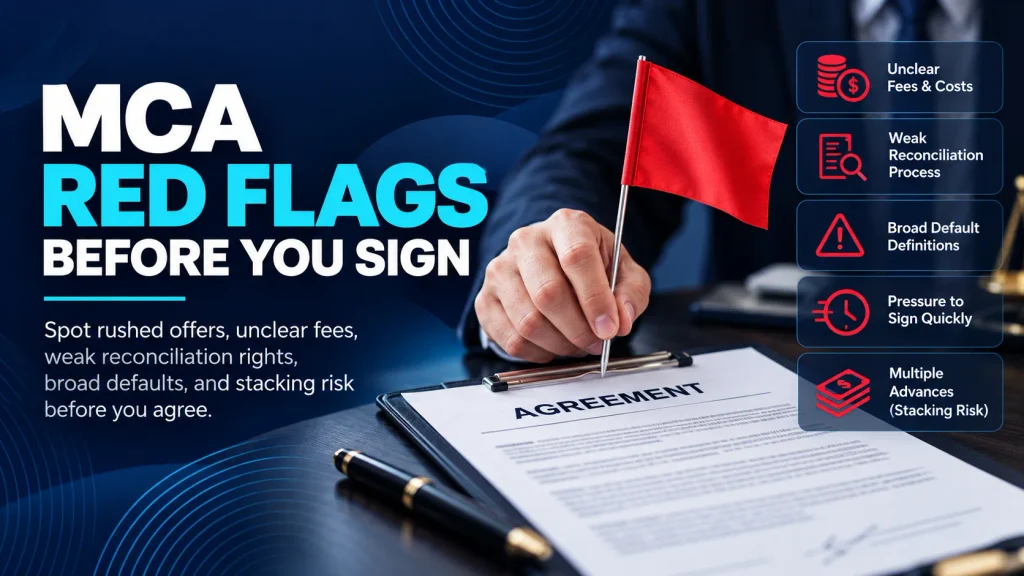
Do not sign if the business cannot identify the net funding amount, total remittance amount, payment frequency, and every fee.
Request a written breakdown. If a broker says that a cost is “standard,” ask who receives it and whether it is deducted from the proceeds.
A reconciliation clause is less valuable if it is difficult to use when revenue declines.
Review how a request is made. Ask for the documents required, the expected response time, and the basis for calculating a revised payment.
Broad default language can turn routine business decisions into alleged contract breaches.
Pay close attention to clauses involving bank accounts, payment processors, additional financing, business closures, financial reporting, and changes in ownership.
High pressure sales tactics increase the chance that a business will accept terms it does not understand.
Do not sign because a broker says the offer will disappear within hours. Ask for time to compare the offer with other funding options and to review the documents with an attorney or qualified financial adviser.
Stacking occurs when a business takes multiple advances at the same time, which can rapidly increase daily payment obligations.
A second advance may solve an immediate cash shortage while making the underlying cash flow problem worse. Calculate the combined daily withdrawals before accepting another offer.
Most MCA disputes begin with payment pressure, disagreement over reconciliation, or an alleged default.
The business should document events as they occur. A clear record is more useful than trying to reconstruct events after a lawsuit or bank restraint.
A business should review its bank activity regularly to confirm that withdrawals match the signed agreement and payment history.
Keep a spreadsheet showing each ACH withdrawal, date, amount, and the account balance after the withdrawal. Compare it with the contract and any payment adjustment notice.
If a withdrawal appears unauthorized or excessive, preserve the evidence. Contact the financial institution and the funder in writing. Get legal advice before taking steps that may affect the agreement or future enforcement.
A funder’s refusal to process a valid reconciliation request may become important in a later dispute.
Submit the request exactly as the contract requires. Include complete supporting records. Keep proof of delivery and copies of all follow up communications.
Do not rely on telephone conversations alone. Written records help establish what was requested, when it was submitted, and how the funder responded.
A funder may claim that a business breached the agreement, misrepresented financial information, or interfered with receivables.
These allegations can arise after missed ACH payments, changed bank accounts, a business closure, another financing transaction, or a dispute over revenue. The business should avoid making inaccurate statements or destroying records.
If the funder alleges fraud or sends a formal notice of default, contact an attorney promptly. Fraud claims can increase the stakes because they may target individuals as well as the business.
Contact with customers, vendors, or processors can disrupt business operations and create additional legal issues.
The agreement may give the funder rights related to receivables or payment processing. However, the scope of those rights depends on the contract and applicable law.
Document every outside contact. Save emails, messages, call logs, processor notices, and statements from customers or vendors. Do not assume that a collection company can say or do anything it chooses because the obligation is commercial.
A lien, restraint notice, or judgment notice requires immediate attention because it can affect access to business funds and assets.
A UCC filing is not the same as a court judgment. A demand letter is not the same as a lawsuit. A lawsuit is not the same as a final judgment.
Read every notice carefully. Identify the sender, court, case number, named parties, deadline, and requested action. Do not ignore a court document because settlement discussions are ongoing.
The first step is to understand the contract, current payment obligation, and available reconciliation process before making a major change.
A cash flow problem can worsen when the business reacts without understanding the default provisions. Preserve options by keeping accurate records and getting timely advice.
Stopping withdrawals or changing accounts without legal advice can trigger allegations of default under many MCA agreements.
Review the ACH authorization, default terms, personal guarantee, collateral provisions, and reconciliation process. A lawyer can explain the risks based on the actual documents and the business’s state.
Written reconciliation requests create a record of the business’s revenue decline and request for payment adjustment.
Follow the contract’s required procedure. Include the documents requested. Keep the original request, delivery confirmation, supporting records, and response.
Complete records help the business assess payments, respond to claims, and explain the situation to legal counsel.
Create one folder for each MCA agreement. Include:
Each MCA may have different payment terms, collateral rights, guarantees, and default provisions.
Do not treat several advances as one obligation. Create a separate summary for each agreement. This makes it easier to identify the total cash flow burden and the legal status of each transaction.
A lawsuit or judgment notice should be reviewed immediately because legal deadlines can be short and jurisdiction specific.
A demand letter may allow time for negotiation. Court papers may require a formal response. Do not assume that a phone call with a broker, funder, or collection company extends a legal deadline.
Confirm the court, case number, plaintiff, defendants, method of service, and response date as soon as possible.
A business may be sued in its home state or in another state named in the agreement. An owner may also be named if a personal guarantee was signed.
An attorney needs the complete document set, not only the first page of the MCA agreement.
Include every version of the agreement, funding statements, renewal documents, broker disclosures, payment records, reconciliation requests, and communications about default or collection.
A collection demand asks for payment. A lawsuit is a filed court action that can require a response.
Read the document for a court name, case number, summons, complaint, hearing date, or response deadline. If those details appear, treat the matter as urgent.
An attorney familiar with commercial financing and MCA disputes can assess the agreement, deadlines, jurisdiction, and available options.
Bring organized documents. Ask whether the attorney represents the business, the owner, or both. Ask about immediate deadlines, potential personal exposure, settlement implications, and any required action to preserve rights.
Legal arguments depend on the agreement, state law, records, conduct of the parties, and procedural history.
A business should not assume that a commonly discussed defense applies to its own transaction. These issues require legal review.
One possible issue is whether the transaction operates as a loan even though it is described as a purchase of receivables.
The analysis may involve payment certainty, reconciliation rights, treatment of business failure, default terms, and the actual conduct of the parties. The contract label alone is not decisive.
Misleading statements, missing required disclosures, or unfair contract provisions may be relevant depending on the facts and applicable law.
Keep the original advertisement, broker messages, disclosure forms, final contract, and funding statement. Differences between what was promised and what was signed can matter.
A funder may breach the agreement if it fails to perform obligations stated in the contract.
Examples may include failing to fund the promised amount, making withdrawals inconsistent with the agreement, or refusing to follow a required reconciliation process. The contract language and records will determine whether a claim exists.
Unauthorized withdrawals, deceptive collection conduct, threats, or misuse of legal process can create separate legal concerns.
Commercial financing does not give a funder unlimited collection rights. Document the conduct and seek advice from counsel. Serious threats or suspected fraud may also need to be reported to the appropriate authorities.
The strongest protection is a careful review before funds are deposited and payment obligations begin.
Fast funding can be useful. But it should not replace a realistic review of cost, cash flow, and legal exposure.
Compare an MCA with available alternatives before accepting the offer.
Depending on the business, alternatives may include a bank line of credit, term financing, SBA backed financing, invoice factoring, equipment financing, supplier terms, or a negotiated payment plan with vendors.
Compare net proceeds, total cost, payment frequency, collateral, guarantee requirements, and the effect on weekly cash flow.
A business should test whether it can make daily or weekly payments during a period of lower sales.
Use a conservative revenue estimate. Include payroll, rent, taxes, inventory, vendor payments, existing debt, and seasonal fluctuations.
If the payment only works when revenue remains at its highest level, the business should treat that as a warning sign.
An attorney can identify clauses that create personal liability, broad default rights, or difficult enforcement conditions.
Prioritize review of the personal guarantee, UCC provisions, ACH authorization, reconciliation clause, default terms, confession of judgment, arbitration, venue, governing law, and attorney fee provisions.
Records are essential for resolving disputes and proving what the parties agreed to.
Save every document from the application stage through final payment. Do not rely on verbal assurances that are not reflected in the written agreement.
A funder generally needs a legal basis and proper process to restrain or access business funds, such as contractual rights, a valid judgment, or another enforceable remedy.
An ACH authorization may allow scheduled withdrawals. It is not the same as an unlimited right to seize money. If a bank account is restrained or a bank sends a legal notice, review the documents with an attorney immediately.
An MCA company may pursue an owner personally if the owner signed an enforceable personal guarantee or is accused of conduct creating individual liability.
The business structure alone does not answer this question. The guarantee language, contract terms, state law, and allegations all matter.
The business should review its agreement, document its revenue, consider reconciliation rights, and obtain legal advice before taking actions that could trigger default.
Do not ignore notices or court papers. A business facing several MCA payments should assess each agreement separately and avoid taking new financing without understanding the combined obligation.
An MCA can be challenged as a loan when the transaction’s actual structure and operation show a fixed repayment obligation rather than a genuine purchase of future receivables.
Whether a court agrees depends on the specific agreement, the facts, and the governing law. This is a legal question that requires review of the complete documents.
Submit the request in writing, preserve proof of delivery and supporting records, and seek legal advice if the refusal conflicts with the agreement.
Do not rely only on a phone conversation. The written record may be important if the dispute escalates.
Many consumer debt collection rules do not apply in the same way to a business financing obligation because an MCA is generally commercial rather than consumer debt.
That does not mean all collection conduct is permitted. Other federal and state laws, contract rules, unfair practice laws, and court procedures may still apply. An attorney can explain which protections and obligations apply to the specific dispute.
Get a custom quote built around your states, industries and volume.